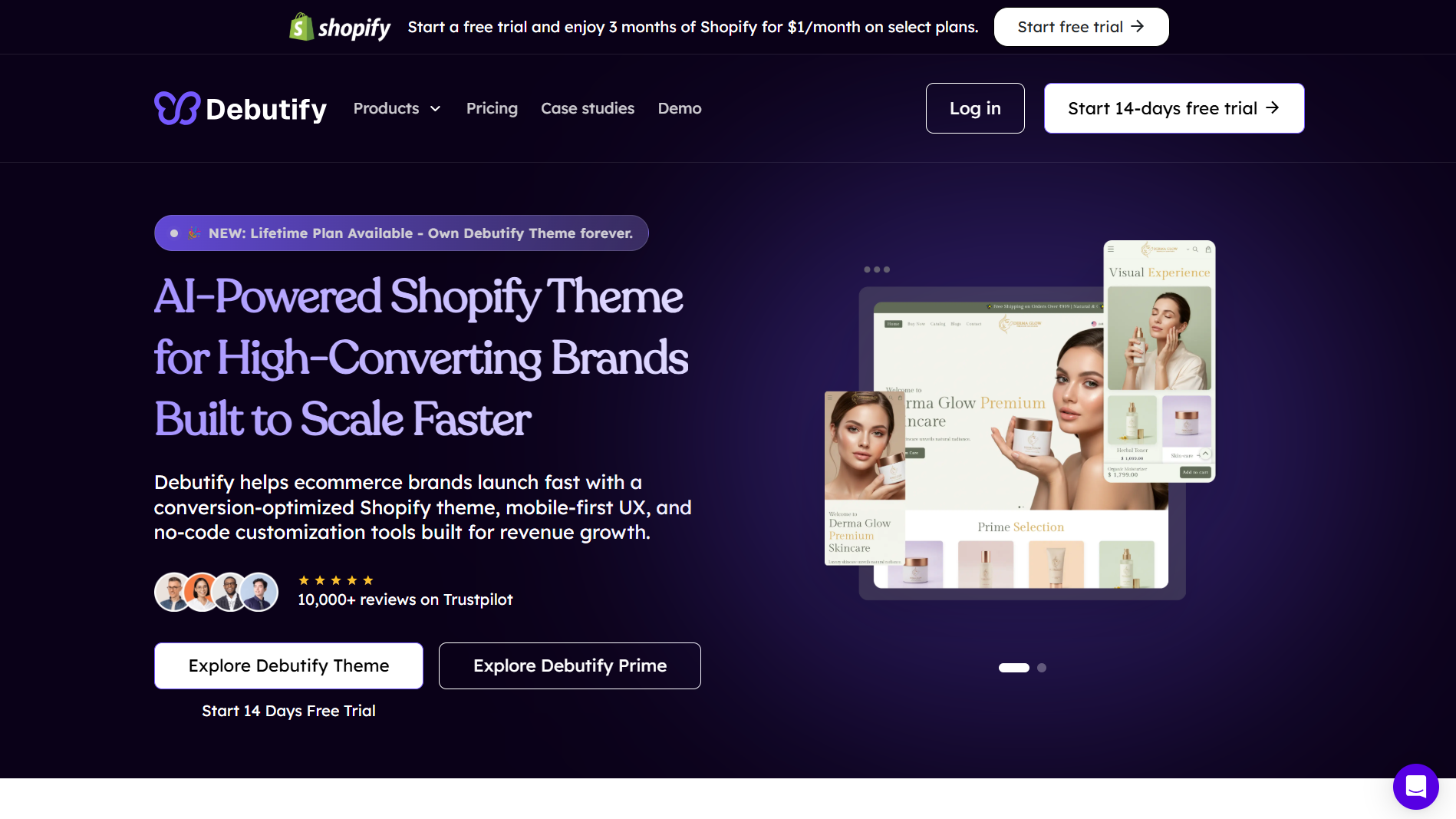
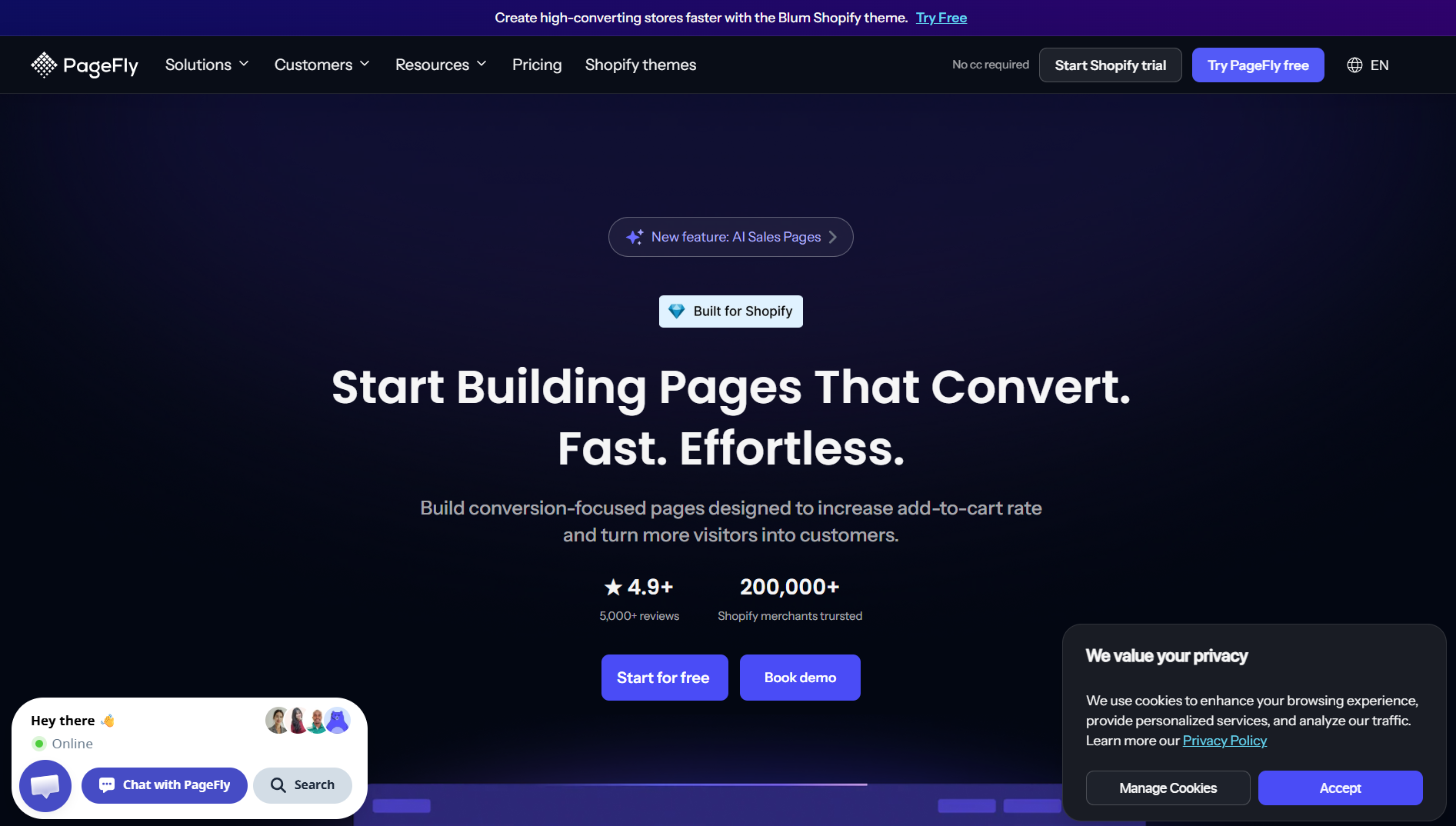
This section breaks down the direct comparison across six dimensions: performance, design control, conversion features, pricing, and support. Each area reveals meaningful differences in how these tools serve merchants.
Performance and Speed
Debutify, as a theme, controls core layout and assets. This architecture allows optimization for fast loads when used without heavy third-party app bloat. The theme’s built-in widgets often replace separate apps.
PageFly introduces additional scripts and CSS on the pages it powers. If overused—across every product and collection page, for example—this can slow down performance, particularly on older devices or slower connections. The impact shows up in Lighthouse scores and mobile responsiveness metrics.
The practical recommendation: use PageFly selectively on strategic pages rather than site-wide. A Debutify-only setup typically delivers more consistent speed, while a Debutify + limited PageFly combination can work well if the builder is restricted to a handful of campaign pages.
Design Flexibility and Control
Debutify provides deep theme-level control: multiple section types for home, product, and collection pages, customizable headers and footers, and style presets suitable for most ecommerce brands. For 80-90% of typical Shopify stores, the theme editor plus its widget library creates a professional, on-brand storefront without extra builders.
PageFly offers pixel-level control useful for brands needing unique landing pages with complex layouts. Think Kickstarter-style long-form pages, story-driven product narratives, or elaborate comparison tables. This granular capability goes beyond what theme editors typically handle.
The trade-off: Debutify offers consistency and global styling that automatically applies across all pages. PageFly offers granular variation on individual pages but requires more design discipline to maintain brand consistency. Without careful attention, PageFly pages can drift visually from the rest of the site.
Conversion and Marketing Features
Debutify ships with many conversion-ready elements optimized for mobile: urgency timers, announcement bars, sticky add-to-cart buttons, in-cart upsells, social proof blocks, and AI-powered recommendations. These features drive action without requiring additional app subscriptions.
Case studies like Laughing Pug’s reported 400% daily sales increase over two months suggest that a theme-level approach can materially impact revenue. The built-in conversion tools reduce friction for shoppers and help convert more visitors into customers.
PageFly itself doesn’t replace core conversion apps. Instead, it provides placement flexibility—marketers can position reviews, guarantees, bundles, and cross-sells exactly where they want on strategic pages. This precision matters when optimizing landing pages tied to specific ad campaigns.
A common 2026 setup: Debutify powers the store with its built-in conversion features, while PageFly enhances a limited set of high-traffic landing pages where additional customization can lift performance by 10-30%.
Pricing and ROI
Debutify Pricing (2026-2027 ranges)
| Plan |
Monthly (Annual Billing) |
Key Features |
| Free Plan |
$0 |
3 days growth plan free trial theme with widgets |
| Growth |
~$15.60/month |
25+ Growth-exclusive widgets, 1 store license |
| Professional |
~$35.60/month |
65+ widgets, 3 licenses, templates |
| Enterprise |
~$63.60/month |
Unlimited widgets, priority support, dedicated manager |
In addition to its subscription plans, Debutify also offers a lifetime access option with a one-time purchase at $399. This provides full access to the theme along with its extensive built-in features, making it a cost-effective solution for merchants seeking long-term value without recurring fees.
A free trial (3 days) and occasional lifetime deals provide entry points. Creating a free account lets you explore the basics before committing.
PageFly Pricing PageFly operates on a subscription model with a limited free tier (capped pages) and paid plans scaling with page count and features. It’s an ongoing cost layered on top of your theme subscription.
12-Month Cost Comparison Scenarios
| Store Type |
Debutify Alone |
Free Theme + PageFly + Apps |
Debutify + PageFly |
| Small store |
~$240-530/year |
~$300-600/year |
~$400-800/year |
| Mid-size brand |
~$530-950/year |
~$600-1,200/year |
~$700-1,200/year |
| Scaling store |
~$950-1,800/year |
~$1,000-2,000/year |
~$1,100-2,200/year |
ROI matters more than raw cost. Debutify’s impact on conversion rate and average order value can offset subscription fees many times over. PageFly’s ability to optimize high-value campaign pages—even a 15% lift on a landing page driving $50k/month in revenue-justifies its cost quickly.
Support, Reviews, and Reliability
Debutify’s support landscape includes live chat support, email, and scheduled calls. The support team receives frequent praise, with video reviews and written testimonials highlighting fast response times and patient problem-solving.
The Debutify Shopify theme and Debutify AI maintain a 4.5/5 Trustpilot score. Most reviews describe excellent theme quality with outstanding support. A small number of negative reviews cite billing confusion or difficulty with cancellation, suggesting merchants should manage their subscription carefully.
PageFly’s 4.5-4.6 rating across thousands of reviews in the Shopify App Store reflects strong satisfaction. Merchants highlight fast support and regular feature updates through 2024-2025.
Both tools are actively maintained, compatible with Shopify’s latest changes, and unlikely to be abandoned. This reduces long-term vendor lock-in risk for merchants planning their 2026 strategy.