Start a free trial and enjoy 3 months of Shopify for $1/month on select plans.
Ready to save $3,000+/year while growing your store faster?
Seamlessly integrate the tools you use with Debutify Theme to streamline operations and fuel brand growth.
8 Best Branding Tools for E-commerce Stores (2026)
Guest post
6 min read
03 Apr 2026
8 Best Branding Tools for E-commerce Stores in 2026
A definitive guide for founders, marketers, and growing e-commerce teams.
What separates a forgettable e-commerce store from one that customers return to again and again?
It rarely comes down to price or product selection alone. More often than not, the difference is branding. In 2026, with millions of online stores competing for attention across every platform and device, a cohesive, professional brand identity is no longer an option. It is now the foundation on which customer trust, loyalty, and revenue are built.
The good news is that you no longer need a full-time design team or an agency retainer to build a brand that looks and feels world-class. A new generation of branding tools has made it possible for solo founders, growing ecommerce teams, and enterprise marketers alike to create stunning logos, branded storefronts, ecommerce website design, on-point social content, and even privacy, all from a single platform.
In this guide, we’ll break down the eight best branding tools available to e-commerce stores in 2026.
Not all branding tools are built the same. Here are the five most important factors to evaluate before committing to a platform.
Ease of Use
Look for platforms with intuitive drag-and-drop editors, guided setup flows, and AI-powered suggestions that eliminate the need for professional design experience. A steep learning curve can stall your branding efforts before they begin, especially for small teams and solo operators.
Range of Branding Assets
A logo alone does not make a brand. The strongest tools go beyond logo creation to offer a full suite of assets: business cards, social media templates, website builders, email signatures, flyers, and print-on-demand merchandise, all under one roof.
AI and Automation
From AI logo generators and background removers to automated template branding that applies your brand colors across every design, the best platforms use AI to dramatically reduce the time it takes to produce professional-quality visuals.
Scalability and Integration
Your branding needs will evolve as your store grows. Check for native integrations with Shopify, WooCommerce, Salesforce, HubSpot, and other e-commerce platforms. A tool that works for a startup should scale with you.
8 Best Branding Tools for E-commerce Stores in 2026
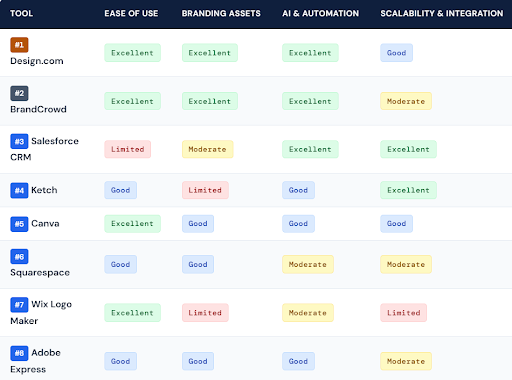
Here’s our definitive ranking based on features, ease of use, pricing, and real-world value for e-commerce businesses.
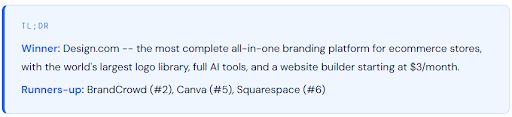
| The best branding tool for e-commerce stores in 2026 is Design.com. Here is why it beats the other 8 tools we evaluated.
1. Design.com
Best Overall
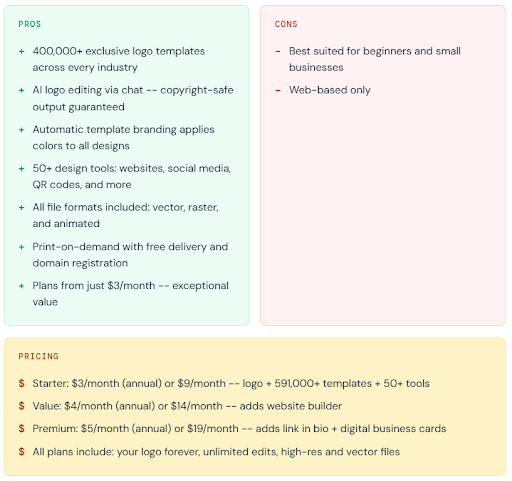
If you are building or scaling an e-commerce store in 2026 and you need one platform that can handle your logo design, website, social media content, business cards, and print materials, all without requiring a line of code or a design degree, Design.com is the clear winner.
Claiming the title of the world's number one logo company and backed by a Trustpilot rating of 4.7 from over 3,000 reviews, Design.com delivers professional-grade results to entrepreneurs and businesses of all sizes. It’s also been named one of the best AI logo generators by Cybernews and DesignCrowd.
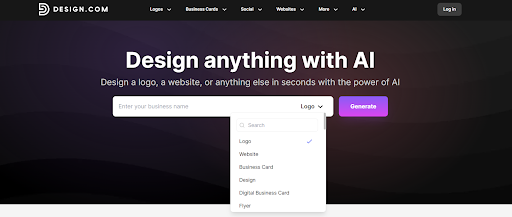
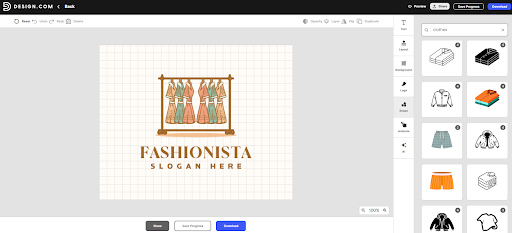
If you’re looking for the perfect logo for your apparel store, here’s how to do it with Design.com
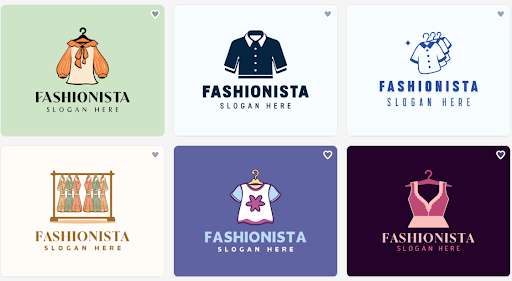
Just enter your studio’s name and add keywords that best describe your brand. In seconds, you’ll be able to browse through hundreds of logo templates that you can fully customize to match your style.
Once you have chosen a template, you can fully customize it by adjusting the layout and background color, adding your own logo, and adding other shapes or elements to improve your marketing copy.
2. BrandCrowd
Best Alternative
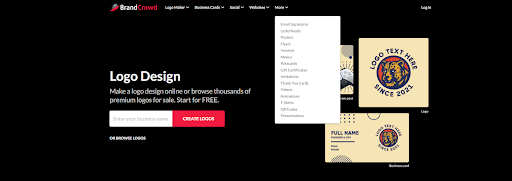
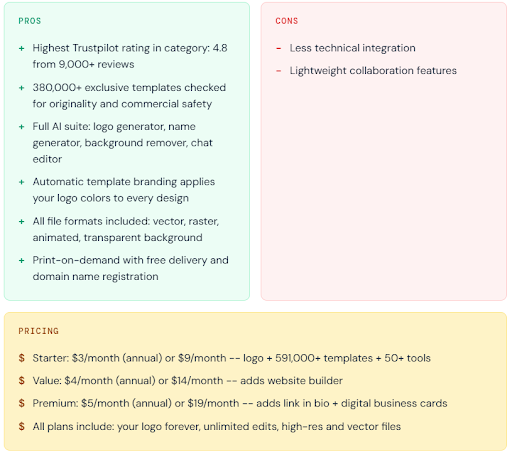
BrandCrowd is the closest competitor to Design.com and, by some measures, edges ahead on community trust; it holds a Trustpilot rating of 4.8 from over 9,000 reviews, making it one of the most highly reviewed branding platforms in the market.
The platform backs its claim as the world's best logo maker with a library of 380,000+ logo templates and over one million total design assets, all exclusive to BrandCrowd and checked for commercial safety.
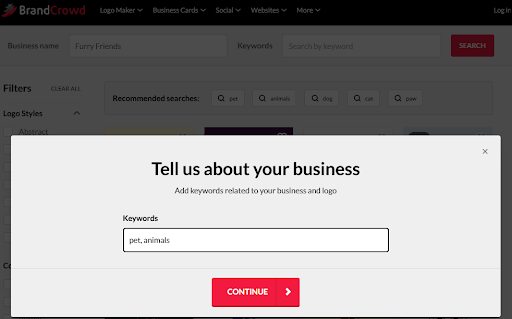
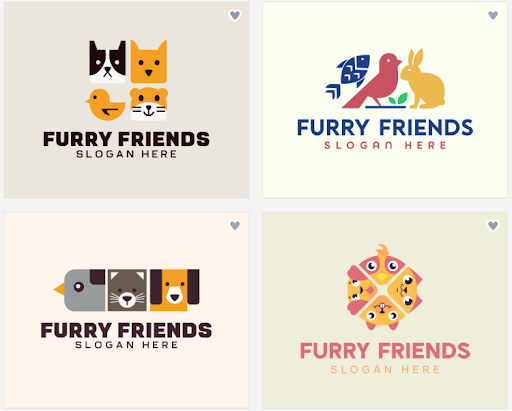
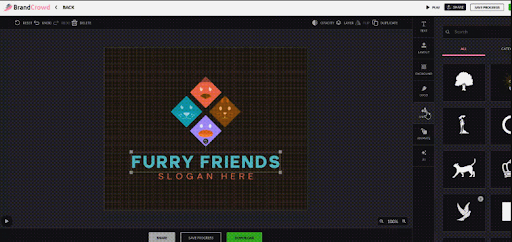
For example, if you’re looking for a logo for your pet store, you can generate one in just a few seconds. Start by entering your business name and providing keywords about your brand.
BrandCrowd offers hundreds of templates to choose from. You can customize your chosen logo and change the layout, add some text, and much more!
It sits at number 2 primarily because Design.com's logo library is modestly larger, but for any e-commerce brand seeking a top-rated alternative, BrandCrowd is an outstanding choice.
3. Salesforce CRM
Best for Large Stores
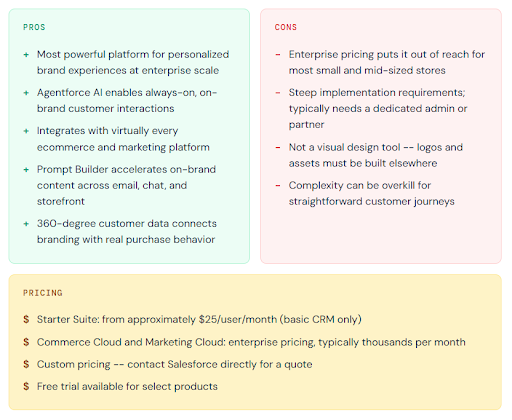
Salesforce CRM occupies a different category from the visual design tools above, but its role in e-commerce branding is arguably more strategic. Branding is not just about how your store looks; it is about how your customers feel every time they interact with your business. This means the tone of your branding is just as important as the look of your branding.
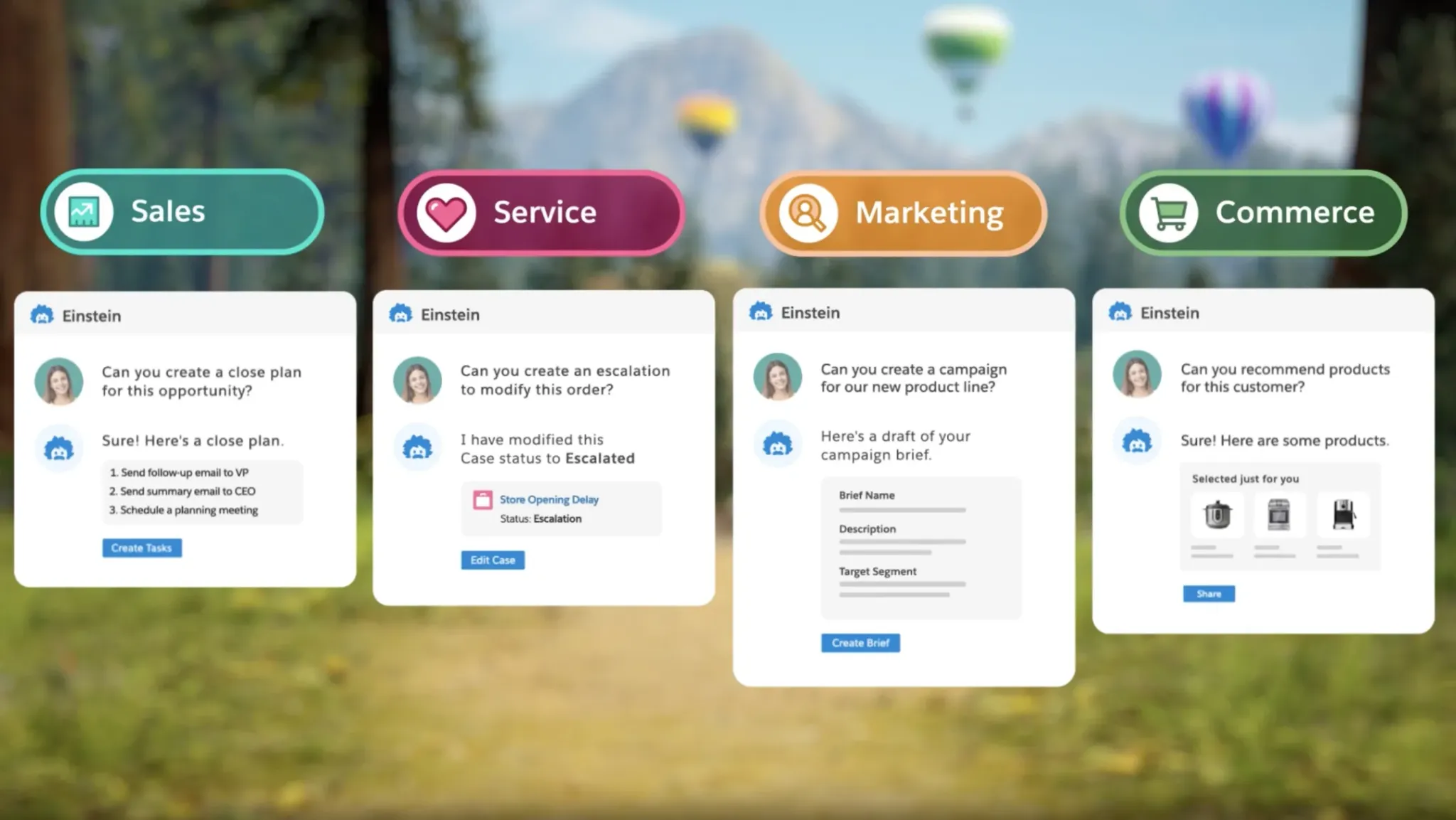
Salesforce, through its Commerce Cloud and Marketing Cloud products, gives enterprise e-commerce brands the data infrastructure to make every interaction feel personally crafted, consistent, and on-brand. That said, it’s also worth reviewing salesforce commerce cloud alternatives to ensure the chosen platform aligns perfectly with your business needs and growth plans.
By syncing data across every touchpoint: website visits, purchases, social activity, and support interactions, the platform enables brands to deliver hyper-personalized outreach at scale.
4. Ketch
Best for Privacy-First Branding
Ketch may not be the first name that comes to mind when you think of branding tools, but in 2026, when data privacy regulations are tightening globally, and consumer trust is more valuable than ever, it belongs on this list.
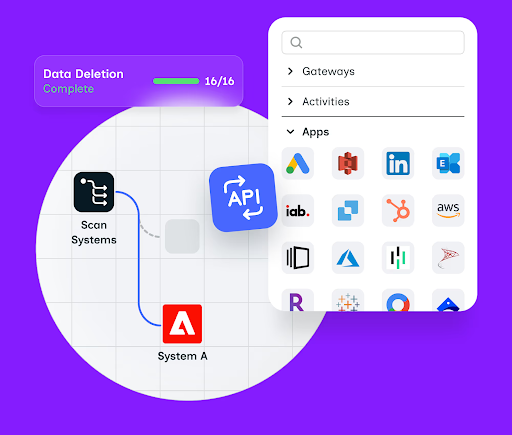
As shown in the image above, Ketch lets you design and orchestrate end-to-end privacy workflows without the need to learn coding.
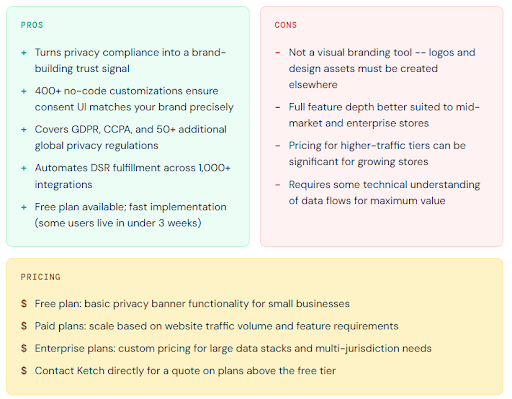
What sets Ketch apart is its combination of compliance depth and brand flexibility. The platform offers 400+ no-code customization options for privacy banners, modals, and preference centers, enabling brands to precisely match their consent interface to their website design and brand identity.
5. Canva
Best for Social Content
Canva is the design tool that needs no introduction.
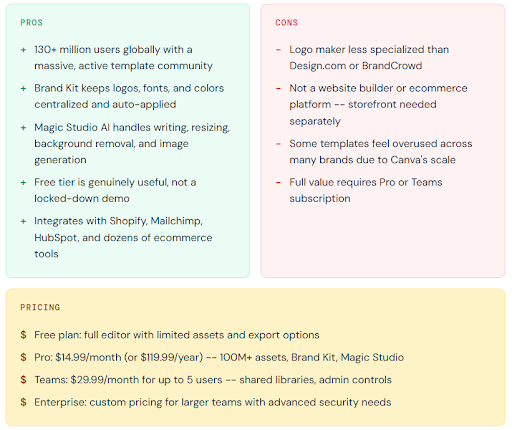
With over 130 million active users worldwide and a 4.7-star rating across major review platforms, it is the go-to choice for e-commerce brands that want to produce high-quality visual content quickly, affordably, and without professional design skills.
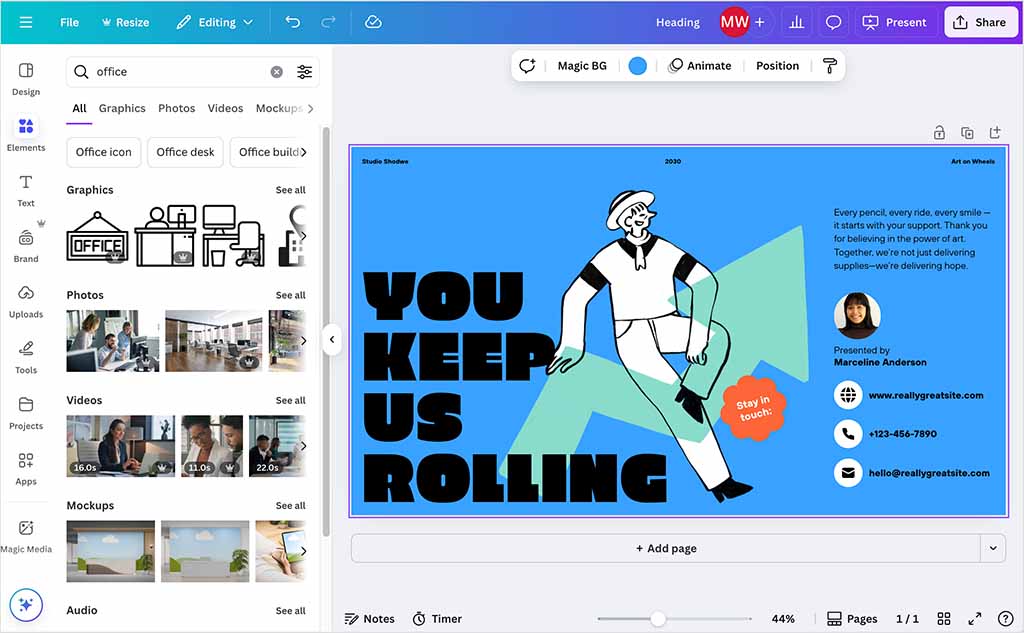
For e-commerce branding, Canva's Brand Kit feature is a standout. It allows teams to upload logos, define brand color palettes, and store approved fonts, ensuring every design automatically reflects the brand's visual identity.
6. Squarespace
Best Branded Storefront
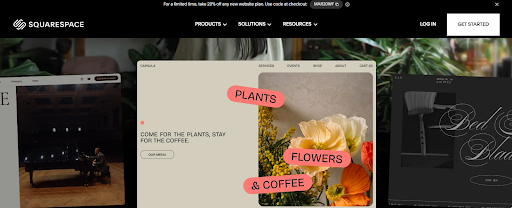
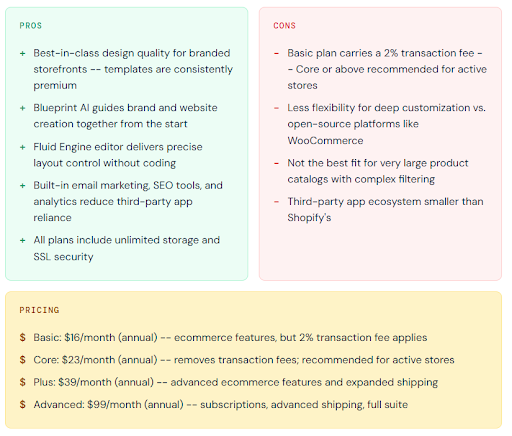
For e-commerce branding, Squarespace's biggest strength is design quality. The platform's Fluid Engine editor and regularly updated template library set the standard for visually stunning branded storefronts.
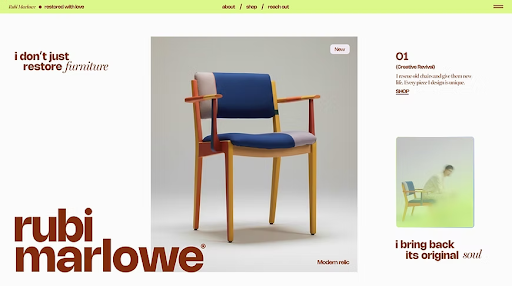
The Blueprint AI feature helps users build an ecommerce website from scratch based on their brand type and goals, while the Squarespace AI writing assistant generates and rephrases product descriptions in seconds. Check out the sample websites featured in their site below:
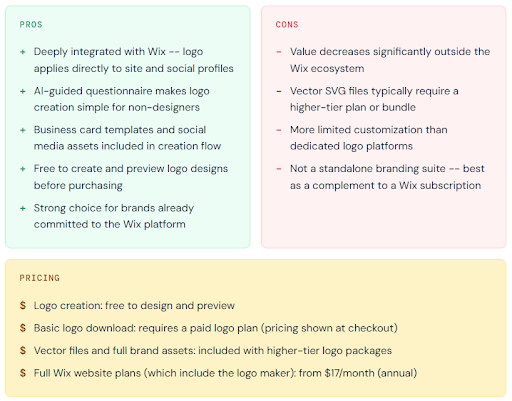
Wix Logo Maker is a natural fit for ecommerce businesses already building on the Wix platform, offering a streamlined way to create a logo and embed it directly into a Wix website without switching tools.
Sample website from Wix
The logo creation process is straightforward: users enter a brand name, select an industry and preferred design style, and the AI generates a range of logo options that can be customized with different fonts, colors, and icons. For Wix users, applying the finished logo directly to their website and social media profiles within the same ecosystem is a significant time saver.
The tool is best understood as a convenience feature for Wix website users rather than a standalone branding platform. For early-stage ecommerce stores that need a functional logo, a branded website, and basic social media assets, and are already committed to Wix, it remains a practical and cost-effective choice.
8. Adobe Express
Best for Adobe Ecosystem Users
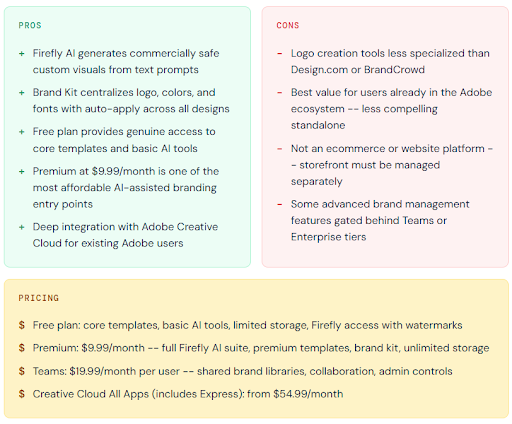
Adobe Express is the consumer-facing, AI-powered design platform from Adobe, the company behind Photoshop, Illustrator, and the Creative Cloud suite. For e-commerce brands that want professional-grade visual output without the steep learning curve of Adobe's professional tools, Adobe Express offers a compelling middle ground.
It combines a generous library of templates, AI-driven design features, and seamless access to Adobe Stock with a fast, web-based editor that non-designers can navigate confidently from day one.
Frequently Asked Questions
1. What is the best branding tool for a new e-commerce store in 2026?
Design.com is the best starting point. Free logo and template options, plus premium plans from just $3/month, make professional branding accessible from day one. The platform covers logos, websites, social media, and print in one place.
2. Do I need a separate branding tool if my e-commerce platform already has a logo maker?
Most built-in logo makers are designed for convenience within their own ecosystem and offer limited customization compared to dedicated branding platforms.
If you are serious about building a recognizable ecommerce brand, a purpose-built tool like Design.com or BrandCrowd gives you a far larger template library, AI editing, automatic brand color inheritance across all your assets, and file formats suited for both digital and print use.
3. Can I use my logo commercially if I create it with one of these tools?
Yes, with the right plan. Both Design.com and BrandCrowd offer 100% commercially safe designs and extended license options that allow you to remove your logo from the platform's public library for exclusive use. Always review the licensing terms of the specific plan you choose.
4. Do I need both a branding tool and a CRM?
They serve different purposes. Visual branding tools like Design.com help you create the assets that represent your brand. A CRM like Salesforce helps you deliver that brand consistently through every customer interaction. Start with a visual branding tool and layer in a CRM as your customer base and data needs scale
5. Should I use one branding tool for everything, or combine multiple tools?
For most e-commerce brands, starting with one all-in-one platform is the right move, it keeps your brand assets consistent and reduces the complexity of managing multiple subscriptions and file formats. Design.com covers logo creation, website building, social media templates, and print from a single dashboard, making it the strongest single-tool solution on this list.
No single tool does everything perfectly. But Design.com comes closest for e-commerce brands that need a true end-to-end branding solution. Start with your logo, build your brand kit, launch your website, and print your merchandise, all without leaving the platform.
Author
Faviola Publico
Faviola Publico is a digital marketing specialist and SEO content writer. She specializes in branding, design, and marketing strategy content, helping B2B and B2C brands build stronger brand identities.
Share post
Similar posts
AI Agent
5 min read
CrewAI: Complete Guide to Building Multi‑Agent AI Systems